Loading component...
Federal Budget 2026–27: CPA Australia’s analysis of the tax changes and business impacts

Loading component...
Read CPA Australia Federal Budget Report
Also read CPA Australia’s full media release
By Lachlan Colquhoun
Treasurer Jim Chalmers’ fifth budget forecasts a deficit of $31.5 billion for the next financial year, $2.8 billion lower than last year, as the government balances government spending on energy security with cuts to the National Disability Insurance Scheme and a major shakeup in the taxation of assets.
As telegraphed in recent weeks, the Australian Federal Budget 2026-27 uses increases on taxes on investment to address what the government describes as intergenerational inequity. Among the most significant changes in decades are new rules covering negative gearing, capital gains and taxation on distributions from trusts.
Chalmers says the aim was to “rebalance a system which is more generous to assets than it is to labour.”
CPA Australia, however, says the changes to capital gains tax and investment savings would disproportionately affect mum-and-dad investors, small business owners and younger Australians trying to build wealth — and represent a missed opportunity to deliver meaningful, long-term tax reform.
“This is not tax reform — it’s a revenue measure that shifts more of the burden onto middle Australia,” says CPA Australia Tax Lead Jenny Wong.
“For anyone looking to invest, grow a business or take on risk, the message is clear — the government will take at least 30 per cent, regardless of the outcome.”
“That effectively creates a minimum tax on aspiration, and it sends the wrong signal at a time when Australia should be encouraging investment, not discouraging it.”
Wong says the changes cut directly against the government’s stated ambition to lift productivity and support economic growth.
Offsets and thresholds
Chalmers says the tax changes on assets would help fund a Working Australians Tax Offset of up to $250 to be paid to 13.3 million working Australians annually from 2027-28, which will effectively increase the tax-free threshold by $1800 to $19,985 at a budgetary cost of over $3 billion per year.
CPA Australia notes this is well below the projected revenue from changes to CGT, negative gearing and the taxation of trusts, estimated to raise almost $7 billion in 2029-30.
Energy security and NDIS savings
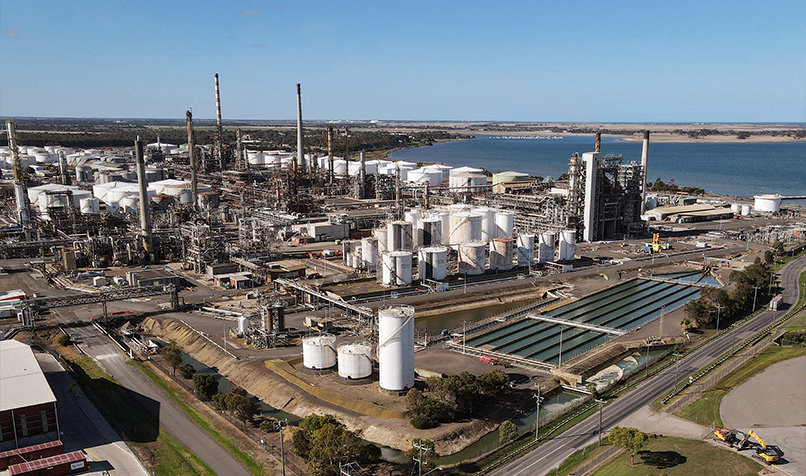
The government has responded to the global oil shock with a $14.8 billion plan to secure more fuel and strengthen Australia’s supply chains, including a $10 billion investment in immediate fuel supplies, the creation of a permanent Australian Fuel Security Reserve and $1 billion in interest free loans to businesses.
There is also a domestic gas reservation policy. From July 1, 2027, exporters will be required to reserve 20 per cent of their supply to the domestic market.
The budget bottom line has been shored up with what Chalmers described as “difficult but necessary reform” to the NDIS, which would save $37.5 billion over the forward estimates.
After a deficit of $31.5 billion this year, the government is forecasting deficits of $31.0 billion, 34.4 billion and $25.3 billion in the years out to 2029-30. A surplus is not expected until 2036.
The budget papers forecast that gross debt will be $982 billion at the end of this financial year (up from $940 billion forecast last year), with net debt hitting $616 billion before growing to $767.8 billion in 2029-30.
Chalmers outlined five principles for the budget strategy:
- Getting through the oil shock
- Taking pressure off people “where we can”
- Making the economy more productive to lift living standards
- Reforming the tax system
- Making the budget stronger, more sustainable and helping to take the pressure off inflation.
Chalmers says the budget delivered the “largest savings package on record” and that the bottom line “is better every year over the forward estimates and medium term.”
The Treasurer characterised the budget as “responsible and reforming,” and one which “builds resilience and bolsters our economy.”
The tax changes: negative gearing, CGT and trusts
Faced with calls to address intergenerational inequity — and facing a volatile economic environment due to conflict in the Middle East — the government has announced several taxation measures it had previously promised not to implement.
Negative gearing on established investment properties purchased from budget night will be abolished, with the new regime set to begin on July 1, 2027. Excess losses will be able to be carried forward and offset against residential property income in future years.
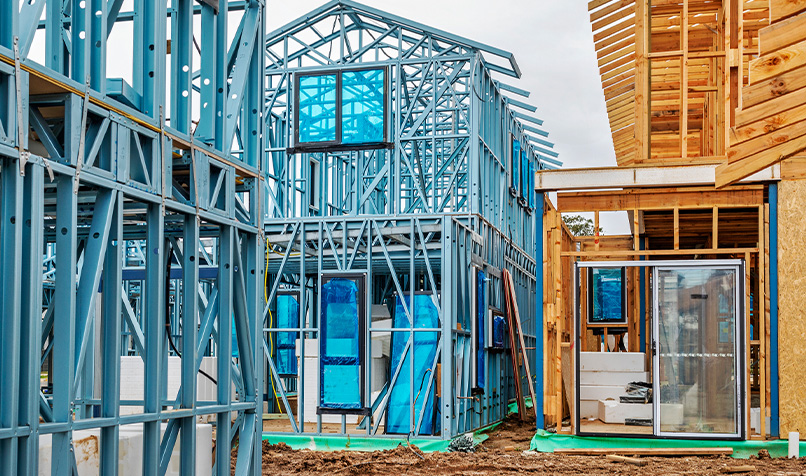
Negative gearing will still be allowed for newly constructed investment properties, as the government hopes maintaining the incentive will boost housing supply. Build-to-rent investment and investment in affordable housing programs will also be exempt.
Existing investors can continue to claim negative gearing concessions until they sell their properties.
Chalmers says the changes are needed to give younger people a better chance of entering the property market, noting that house prices had risen by more than 400 per cent since 1999, twice as fast as incomes.
Treasury has forecast the changes will limit house price growth by 2 per cent and deliver a saving of $19,000 on the purchase of a median-priced home. Chalmers says the changes would enable 75,000 Australians “achieve the dream of home ownership.”
On capital gains, the existing 50 per cent discount on assets held for 12 months or more will be scrapped from July 1, 2027, and replaced with a “Keating era” inflation index approach that taxes real gains over an assets holding period.
In a surprise move, the Treasurer also announced a 30 per cent minimum tax on net capital gains. This will apply to all CGT assets, including pre‑1985 assets held by individuals, trusts and partnerships. Capital gains accrued on pre‑1985 assets before 1 July 2027 will remain exempt from CGT.
New builds would “retain the option to use the 50 per cent discount,” says Chalmer.

Distributions from discretionary trusts will be taxed at a new minimum of 30 per cent, a change from the current model which taxes beneficiaries at their individual marginal tax rates. Primary production would be excluded from this tax measure.
CPA Australia warns that the measures risk pushing capital and talent offshore at a time when global competition for investment and people is intensifying.
“Why would you build and grow a business here when other markets are more supportive of investment and innovation?” Wong asks.
“We risk losing not just capital, but our most ambitious and entrepreneurial talent.”
CPA Australia also says the increased complexity of the tax system would disproportionately favour wealthier, more sophisticated investors, further entrenching inequality.
“The more complicated the system becomes, the more it advantages those with access to advice and the ability to restructure,” says Wong.
“This is not levelling the playing field — it’s tilting it even further in one direction.
Small business measures
For small business, the budget permanently extends the $20,000 instant asset write off for businesses with turnover of under $10 million per year.
It also re-introduces loss carry-back provisions, allowing companies with turnover of up to $1 billion to carry back tax losses from current years against taxes paid over the previous two years.
From July 2028, new small businesses that incur tax losses in their first two years will be able to convert those losses into a refundable tax offset. The offset can be claimed against fringe benefits tax and PAYG withholding paid, improving early cash flow for start‑ups.
In a bid to boost early-stage investment, while Chalmers adds that tax incentives for venture capital would be expanded to drive Research & Development and support “high impact” innovation.
Economic outlook

Chalmers says Australia is facing its fifth economic shock in less than 20 years, and Treasury was forecasting inflation to peak at around 5 per cent in the middle of the year in response to the Middle East conflict.
Growth was expected to come in 50 basis points lower next financial year at 1.75 per cent. Treasury modelled a scenario in which the price of oil peaked at US$200 per barrel and took three years to fall.
Chalmers says this will not push Australia into recession, although unemployment would “spike to pre-pandemic levels and inflation would peak above 7 per cent.”
Visit CPA Australia’s Federal Budget 2026-27 hub for expert analysis to help you understand what the Budget means for business, finance and the economy ahead.
Want more? Tune in to our YouTube Live webinar on 13 May 12:00 — 1:00pm AEDT
Loading component...
Discover more

Will small business clients clamour for restructuring following changes to discretionary trust taxation?
Here’s how the Budget’s changes to discretionary trusts will work.
- Taxation
- Budget
article·Published onFederal Budget 2026-27: CPA Australia’s expert analysis
13 May 2026 | Key budget measures analysed and business and tax impacts explained
- Budget
- Taxation
- Small Business
Published on19:29 min read timeTax reform tops Federal Budget 2024 wish list
A close look at which taxes need to be tackled and why
- Taxation
- Budget
article·Published onAustralian Federal Budget 2026-27
All the latest news and analysis on Australia’s Federal Budget announcement
- Budget
- Taxation
- Economy
Australian Federal Budget 2025-26
Expert summary of the Australian Federal Government’s 2025-26 Budget and what it meant for accountants, business and finance professionals
- Budget
- Taxation
Wellbeing, the environment and jobs: Five spoilers for the 2022-23 budget
Published in Smart Company (October 2022)
- Budget